


Home Loan for Self-Employed: Eligibility & Documents Required
How self-employed professionals and business owners in India can qualify for a home loan in 2026, what documents are needed, and how to strengthen a weak file.
Why Self-Employed Applications Are Assessed Differently
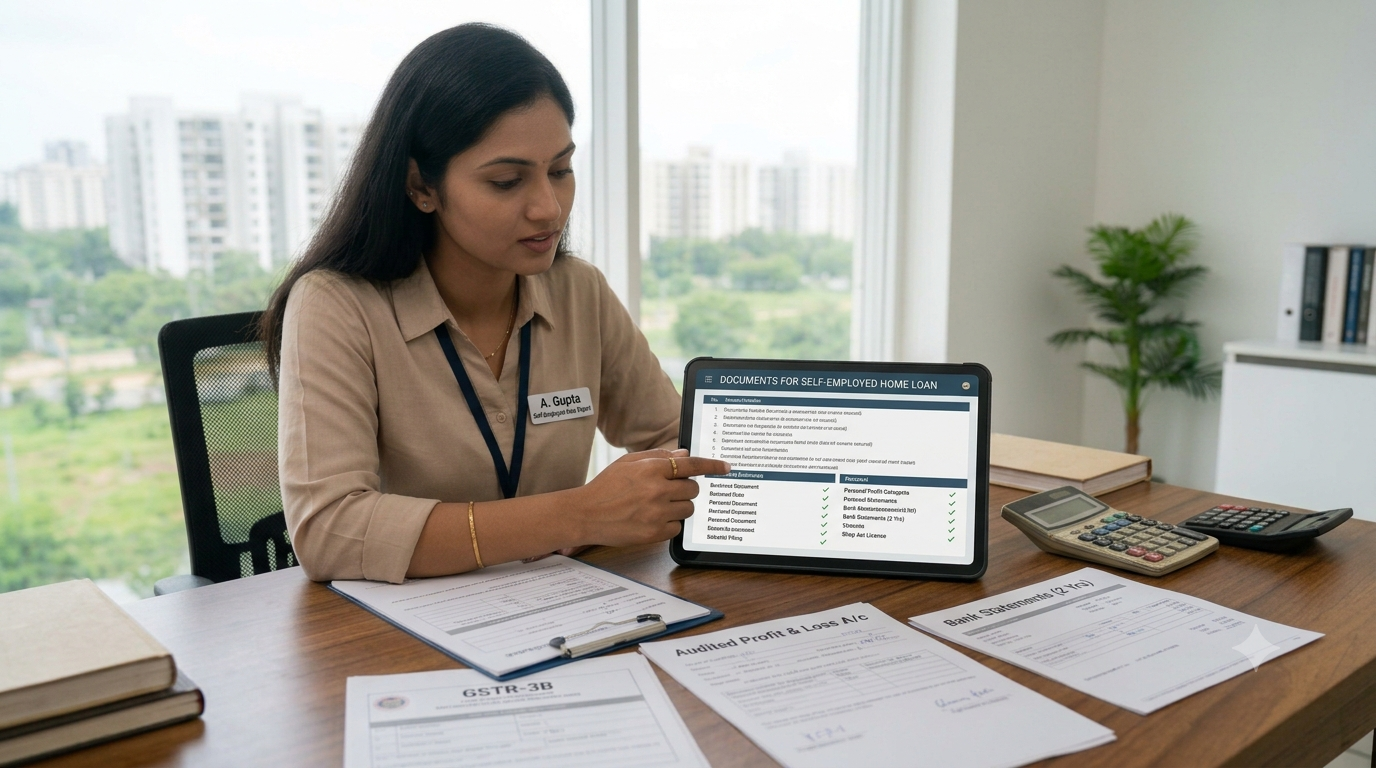
Lenders can't rely on a fixed monthly salary slip for self-employed applicants, so they instead assess average income over the last two to three years using income tax returns and financial statements, along with the stability and growth trend of the business itself. This makes the process more document-intensive, but it is very much a well-established, routine category, not a niche exception.
Who Falls Under 'Self-Employed' for Lenders
This category includes business owners, proprietors, partners in a firm, doctors, chartered accountants, architects, consultants and other independent professionals, and freelancers with a documented, consistent income stream. Each sub-category has slightly different documentation nuances, for instance, professionals often submit a certificate of practice alongside their ITRs.
Key Eligibility Factors
Lenders look at business vintage (most prefer at least 2-3 years of continuous operation), consistency or growth in declared income year-on-year, industry type and its perceived stability, and the applicant's personal CIBIL score alongside the business's credit behaviour if it has its own borrowings.
Documents That Strengthen Your Application
Beyond the standard ITRs and financials, maintaining GST returns that align with your declared turnover, clean and well-maintained current account statements, and a professional CA-audited balance sheet all build lender confidence. A sudden, unexplained spike in declared income in the most recent year, without matching bank credits, is a common red flag that invites additional scrutiny.
Common Reasons Self-Employed Applications Get Rejected
Declaring a low taxable income to save on tax, while understandable from a tax-planning perspective, directly reduces your home loan eligibility since lenders assess loan amount based on declared, provable income. Irregular or unexplained cash deposits, inconsistent ITR filing, and a high existing business debt load are the other frequent culprits.
How Perfect Solutions Helps Self-Employed Borrowers
We work with lenders who genuinely understand self-employed and professional income patterns, including NBFCs and housing finance companies with more flexible, judgment-based underwriting for this category, and we help you present your financials in the clearest, most lender-friendly format possible.
Common questions
Frequently asked questions
How many years of ITR do I need for a home loan if I'm self-employed?
Most lenders ask for the last 2-3 years of income tax returns along with computation of income, though some flexible NBFCs may consider 1-2 years for well-established professionals.
Can a freelancer get a home loan in India?
Yes, provided you can show a consistent income stream through bank statements, ITRs, and ideally a stable client history, though eligible loan amounts may be more conservative than for salaried or established business applicants.
Does low declared taxable income hurt my home loan chances?
Yes, significantly. Lenders base your eligible loan amount on your declared, provable income, so under-reporting income for tax purposes directly reduces the loan amount you can qualify for.
Not sure where you stand?